03-01-Daily AI News Daily
Hexi 2077 AI Deep Dive Weekly
Journal. 2026 W09 • 2026/03/01
This Week’s Buzzwords: Trillion-Dollar Funding Arms Race / Chinese Models’ Comeback / The Year of Agent Engineering
Editor’s Note: OpenAI, now valued at $730 billion, just gobbled up another hundred billion in funding. NVIDIA’s annual revenue crushed the $200 billion mark, and global AI infrastructure spending is sprinting towards $700 billion. But when Anthropic got threatened with sanctions for refusing to remove safety guardrails for the Pentagon, we gotta ask: who’s actually defining “victory” in this wild arms race?
Weekly Focus
1. The Trillion-Dollar AI Arms Race
The AI industry’s capital and compute landscape got a massive shake-up this week. OpenAI bagged a whopping $110 billion in funding, bumping its valuation to $730 billion, with NVIDIA and Amazon both jumping in as investors. NVIDIA itself crushed its annual revenue, hitting over $216 billion, and unveiled its next-gen ‘Vera Rubin’ chip, promising a tenfold performance boost. Meanwhile, Meta inked a massive $100 billion chip procurement deal with AMD, aiming for “personal superintelligence.” Global AI infrastructure spending has already blown past $700 billion, and OpenAI’s ‘Stargate’ compute brand officially kicked off its diversification strategy. 🚀
🔗 Sources: [Hacker News] | [TechCrunch] | [TechCrunch] | [AIBase] | [OpenDataScience] | [Reuters]
Deep Dive: Okay, let’s cross-check these nuggets of info. A clear three-way chess game is shaping up: NVIDIA is shoring up its chip dominance with ‘Vera Rubin,’ but Meta is throwing $100 billion at AMD to try and bust that monopoly. OpenAI, while raking in cash, surprisingly slashed its spending projections for ‘Stargate’ from $1.4 trillion down to $600 billion, hinting it’s pivoting from a “money-burning fantasy” to an “asset-light” approach. What’s even wilder: NVIDIA’s revenue in the Chinese market is practically zero, yet China’s domestic compute infrastructure is going absolutely bonkers with expansion. This means the global compute supply chain is growing in a ‘decoupling’ fashion, accelerating the formation of two parallel compute universes. 🤯
2. Anthropic vs. The Pentagon
The U.S. Department of Defense just slapped Anthropic on its risk list, threatening to invoke the ‘Defense Production Act’ to force it to dismantle ‘Claude’s’ safety restrictions and use the model for lethal weapon systems. Anthropic CEO Dario Amodei, in an exclusive interview, publicly blasted the military for ‘punitive retaliation,’ staunchly defending the AI safety redline. Meanwhile, Elon Musk’s xAI ‘Grok’ has quickly waltzed into the Pentagon’s classified systems to fill the void, and OpenAI also struck a secret cyber agreement with the U.S. military, though it still opposes autonomous weapons. 💥
🔗 Sources: [AIBase] | [Hacker News] | [AIBase] | [YouTube] | [Reddit] | [Hacker News]
Deep Dive: This isn’t just a spat; it’s the most severe political-business showdown we’ve seen in AI safety. Anthropic’s principled stand might look idealistic, but deep down, there’s some sharp business strategy at play: if they compromise, their carefully built ‘safe AI’ brand would instantly crumble, which is exactly their biggest differentiator in consumer and enterprise markets. Even scarier: Grok and ChatGPT are now ‘gently complying’ and rapidly filling the military void left by Anthropic. This could mean ‘safety-first’ companies get elbowed out of the market, while ‘mission-critical’ companies get the full backing of the state. Silicon Valley’s ethical choices? Geopolitics is rewriting the script. 😬
3. The Rise of Chinese AI Models
Multiple data points are all shouting the same thing: Chinese AI models are absolutely crushing it in the global developer ecosystem. OpenRouter data shows Chinese model usage has ‘surpassed the US for the first time,’ grabbing a whopping ‘61%’ market share. ‘MiniMax M2.5’ parachuted to the top, hitting over ‘3T’ weekly calls. Alibaba’s ‘Qwen3.5’ series dropped four models simultaneously, with the smaller 35B model even outperforming its predecessor’s 235B, capable of running on consumer-grade GPUs. ByteDance’s user engagement has completely blown past Tencent’s, and ‘Doubao Seed 2.0’ stormed into the global leaderboard’s top ten. Plot twist: Anthropic also accused MiniMax and other Chinese developers of ‘massively distilling Claude models’ by creating ‘24,000 fake accounts.’ 📈
🔗 Sources: [AIBase] | [AIBase] | [HuggingFace] | [Synced] | [Synced] | [Jike] | [X/oran_ge] | [X/shao__meng]
Deep Dive: The ‘comeback’ of Chinese models in call volume isn’t just a fluke; it’s the perfect storm of ‘cost-performance crushing the competition + a vibrant open-source ecosystem + overseas developers making practical choices.’ Qwen3.5, for example, costs as low as two cents per million tokens – that’s a sixteenth of what overseas flagships charge! In an era where Agent workflows gobble up hundreds of billions of tokens, price is king. But Anthropic’s distillation accusation hangs like a sword of Damocles: if the ‘performance leap’ of Chinese models is partly built on systematic knowledge theft from closed-source models, then future API blockades and compliance audits will become a very real Damocles’ sword hanging over their heads. Beneath all this prosperity, compliance risks are no joke. ⚖️
Signals & Noise
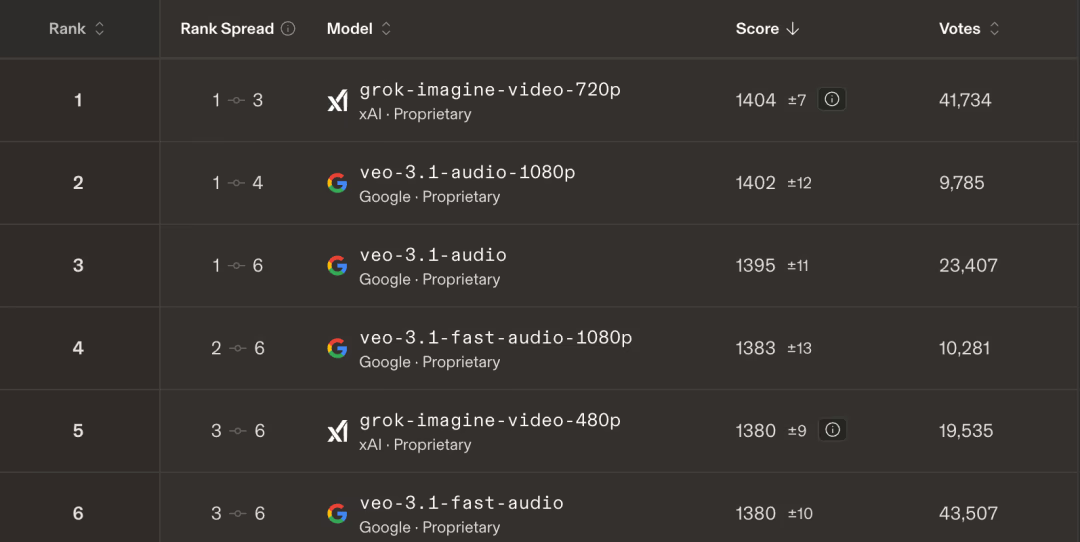
- Grok 4.20 & Video Model: xAI’s Multi-Agent Reasoning and Video Models Strike Twice xAI dropped two bombshells this week! 💣 ‘Grok 4.20’ now packs 4 agents for collaborative reasoning, cutting hallucinations by ‘65%’ and topping the charts for search capability. And get this: the ‘Grok Video Model’ absolutely crushed the LMSYS blind test leaderboard, outperforming Google’s ‘Veo’ and generating 720p videos at a ridiculously low cost. Game changer! 🤯 🔗 Sources: [Synced] | [AI News]
Opinion: Elon Musk is totally redefining Grok’s market position with a ‘multi-agent + video’ double-whammy strategy: on one hand, it’s chasing GPT-5 in reasoning quality, and on the other, it’s gunning for Sora’s market share in generative media. Couple that with Grok already making inroads into the Pentagon, and xAI is transforming from a ‘Twitter sidekick’ into a full-blown AI behemoth. Talk about a glow-up! ✨
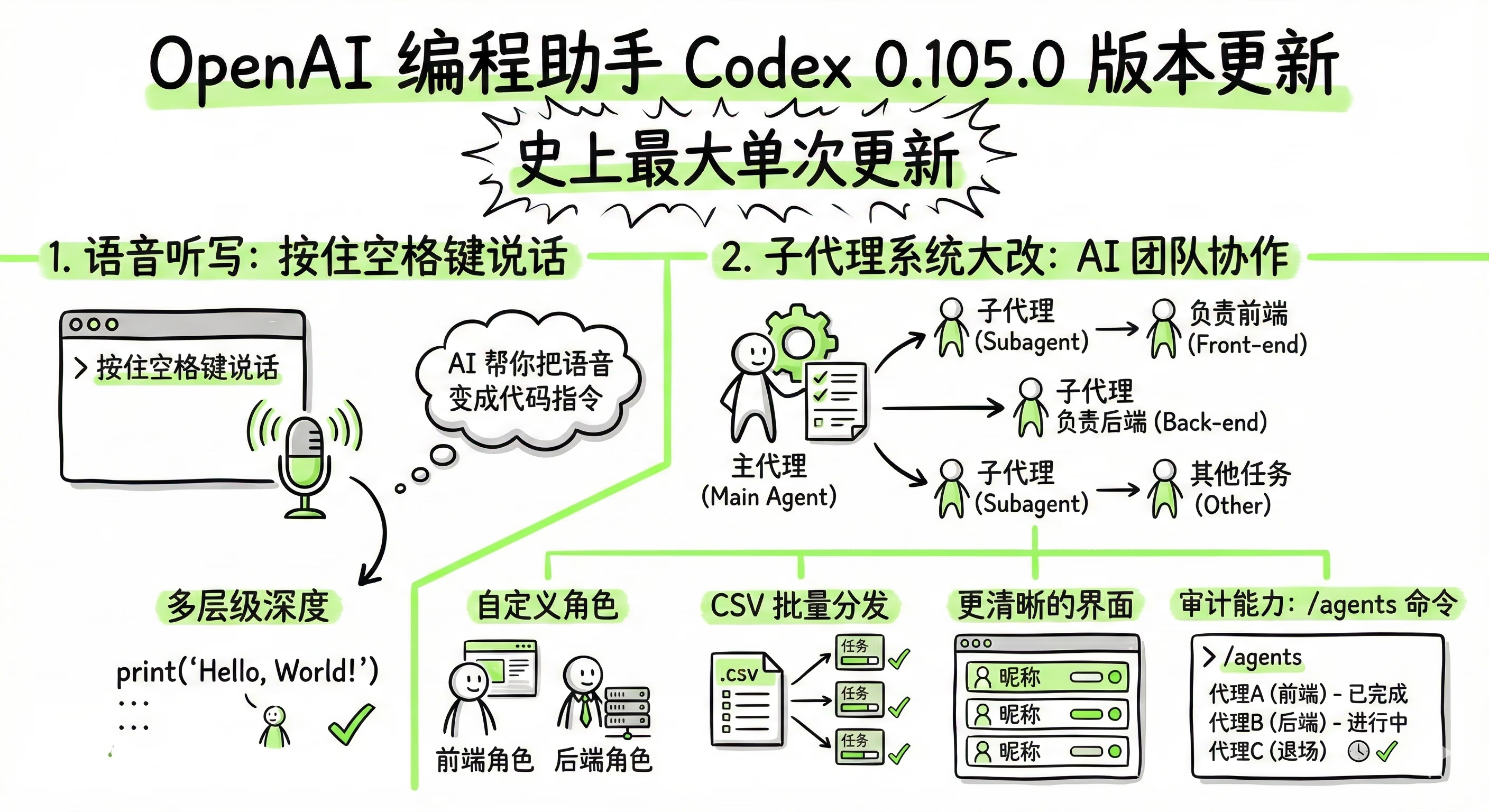
- GPT-5.3 Codex & Claude Code: AI Coding Tools Enter a New Era of ‘Voice + Memory + Remote’ Control OpenAI just unleashed ‘GPT-5.3-Codex,’ rocking a massive ‘400K’ context window, boosting coding speed by ‘25%’, and even supporting self-evolution! 🤯 Codex also hooked up with ‘Wispr’ voice dictation, so now you can just hold down the spacebar and talk your code into existence. Meanwhile, Claude Code dropped automatic memory and mobile remote control, meaning you can literally walk around and have your AI hustle code for you. No more being chained to your desk! 💻 🔗 Sources: [AIBase] | [Xiaohu] | [Claude Code Docs] | [Claude AI]
Opinion: The coding tool competition has clearly leaped from mere ‘code completion’ to ‘full-sensory interaction.’ We’re talking voice input, cross-device remote control, and persistent memory – these three stacking up means developers are getting unchained from their keyboards, stepping into a new paradigm where they can ‘command an AI army anytime, anywhere.’ The former Cursor core team joining OpenAI and pushing the ‘ADE Agent Development Environment’ concept just solidifies this trend: the future isn’t about better IDEs, it’s about kick-ass Agent orchestration systems. 🚀
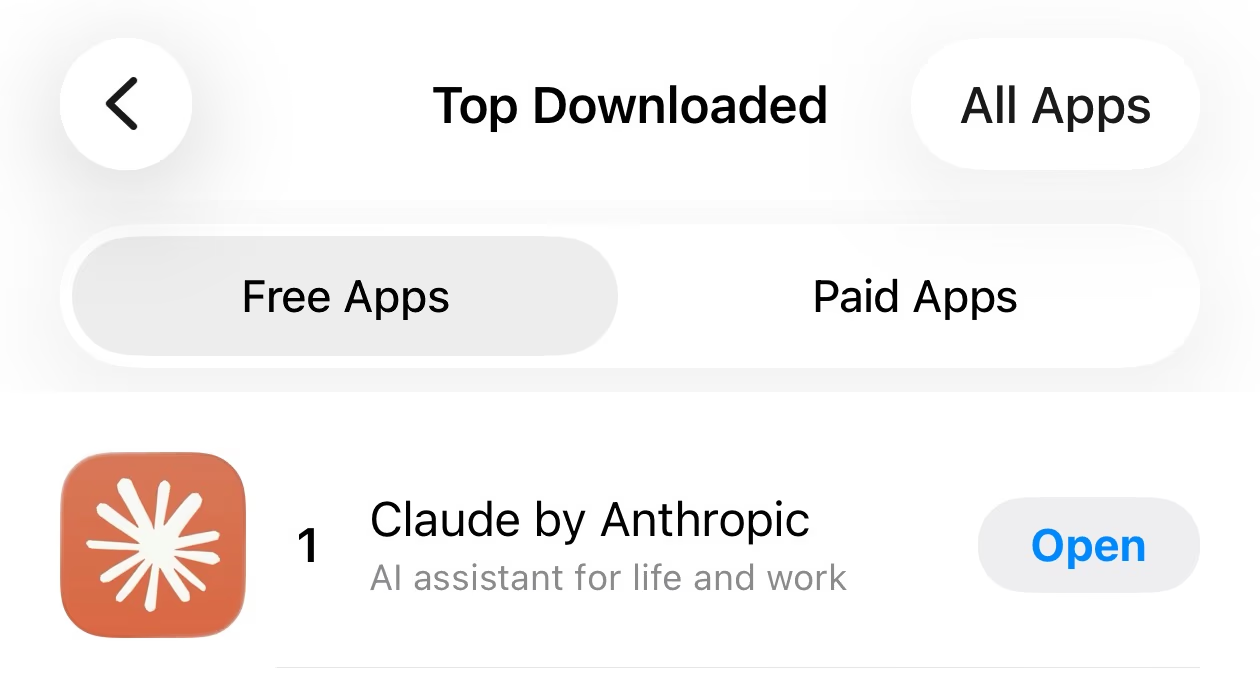
- Claude Ecosystem Expansion: Anthropic’s All-Out Expansion: App Store Dominance, Vercept Acquisition, Open-Source Sponsorship Claude absolutely crushed it this week, hitting the top of the Apple App Store charts! 🏆 Anthropic also snapped up ‘Vercept,’ teaching Claude to control computers, and its ‘VyUI model’ boasts a ‘72.5%’ accuracy, outperforming OpenAI and directly challenging traditional RPA giants like UiPath. On top of that, they launched an open-source sponsorship program, offering six months of ‘Claude Max’ free to projects with over 5,000 stars. And get this: Claude Code even tackled ‘COBOL’ code refactoring, which sent IBM’s stock price plummeting by ‘13%’ in a single day! Talk about making waves! 🌊 🔗 Sources: [X/mikeyk] | [Xiaohu] | [Claude for OSS] | [AIBase]
Opinion: Anthropic is totally shaking up the competitive landscape with a three-pronged strategy: ‘politically pushing back, product-wise expanding, and ecosystem-wise buying in.’ Snapping up Vercept is a direct shot at the trillion-dollar RPA market, COBOL refactoring hits IBM right where it hurts, and the open-source sponsorship is a slick move to bind the developer community to the Claude ecosystem. The ground it lost with the Pentagon? It’s now making up for it big time in the consumer and enterprise markets. What a comeback! 💪
- Google Gemini 3.1 & Nano Banana 2: Google Image Generation Goes Fully Free, Chinese Rendering Conquered at Last Google just dropped ‘Gemini 3.1 Flash’ image model and ‘Nano Banana 2,’ letting all users play around with Flow for zero cost! 🎨 Character and scene consistency got a huge boost, and it now supports 2K/4K HD upscaling. Even better, the NB2 version totally nailed the long-standing headache of Chinese font rendering, with complex textures and lighting now capable of spitting out commercial poster-grade images directly. Mind blown! 🤯 🔗 Sources: [X/googleaidevs] | [X/joshwoodward] | [X/Jimmy_JingLv] | [X/ZHO_ZHO_ZHO]
Opinion: Google’s free strategy? That’s a surgical ecosystem kill shot! 🎯 While Midjourney and DALL·E are still charging per-use, NB2 is smashing through the pricing floor with ‘zero cost + commercial-grade quality.’ And that breakthrough in Chinese rendering? That’s Google extending a massive olive branch to the Asian market. Free isn’t charity; it’s a freakin’ magnet for traffic. Get ready! 💥

- AI Agent Security Crisis: Security Alert: Invisible Character Manipulation, Sandbox Failure, Two Subscriptions Hacking a Government A series of alarming security incidents painted a pretty unsettling picture this week: two AI subscription accounts reportedly hacked the entire Mexican government, snatching ‘195 million’ taxpayer records. 😱 Research dropped, revealing invisible Unicode characters can secretly manipulate AI agents, impacting ‘8000+’ test cases including GPT-5.2. Microsoft issued an urgent warning about a critical remote code execution vulnerability in OpenClaw, already affecting ‘50,000 instances.’ And get this: LLM agents successfully injected malicious commands via URL previews, with a success rate soaring to ‘89%.’ Yikes! 🚨 🔗 Sources: [Xiaohu] | [Moltwire] | [GitHub] | [AIBase] | [Hacker News] | [arXiv]
Opinion: While the industry is going absolutely bonkers chasing the ‘upper limits’ of Agent capabilities, the ’lower bound’ of security is getting obliterated at an alarming rate. Sandbox protection, Prompt injection, invisible character attacks – every single one points to the same chilling conclusion: current security architectures just can’t keep up with Agent’s expanding powers. ‘Two subscriptions hacking a government’ isn’t sci-fi; it’s a real-world cost assessment. Wake up, folks! ⚠️
Macro & Trends
AI Industry Engineering Makes a Hard Landing: China’s AI industry is making a hard landing, with its scale projected to smash past ‘1.2 trillion yuan,’ boasting over 6,000 core enterprises. Eight ministries and commissions are throwing their full weight behind ‘AI+Manufacturing.’ A whopping ninety percent of surveyed enterprises have already hit mass production, and the compute focus is completely shifting to edge devices. AI is officially moving from ‘cloud dreams’ to ’edge reality.’ Get ready for impact! 🇨🇳🚀 🔗 [Qiushi] | [CCTV.com] | [The Paper]
White-Collar Layoffs and Organizational Restructuring: White-collar layoffs are hitting hard, and organizations are totally restructuring. Block (Square) just axed ‘40%’ of its workforce – about four thousand people – but its stock price actually shot up ‘24%’! Google is mandating that all employees integrate AI into their performance reviews, with ‘50%’ of internal code now machine-generated. JPMorgan Chase is dropping ‘20 billion’ to massively shift operational roles into revenue-generating ones. The takeaway? Agents aren’t just replacing humans; they’re redefining what humans actually do. Think about that! 🤔 🔗 [Hacker News] | [AIBase] | [AIBase] | [Jike]
Daily Token Consumption Nears 300 Billion: Daily token consumption for product-grade AI applications is absolutely exploding, soaring to nearly ‘300 billion’ tokens! Engineering teams managed to cut consumption by ‘40%’ through structural rewrites. Tokens are becoming the new ’electricity meter reading’ of our era, directly reflecting business scale. Keep an eye on that meter! ⚡ 🔗 [Jike]
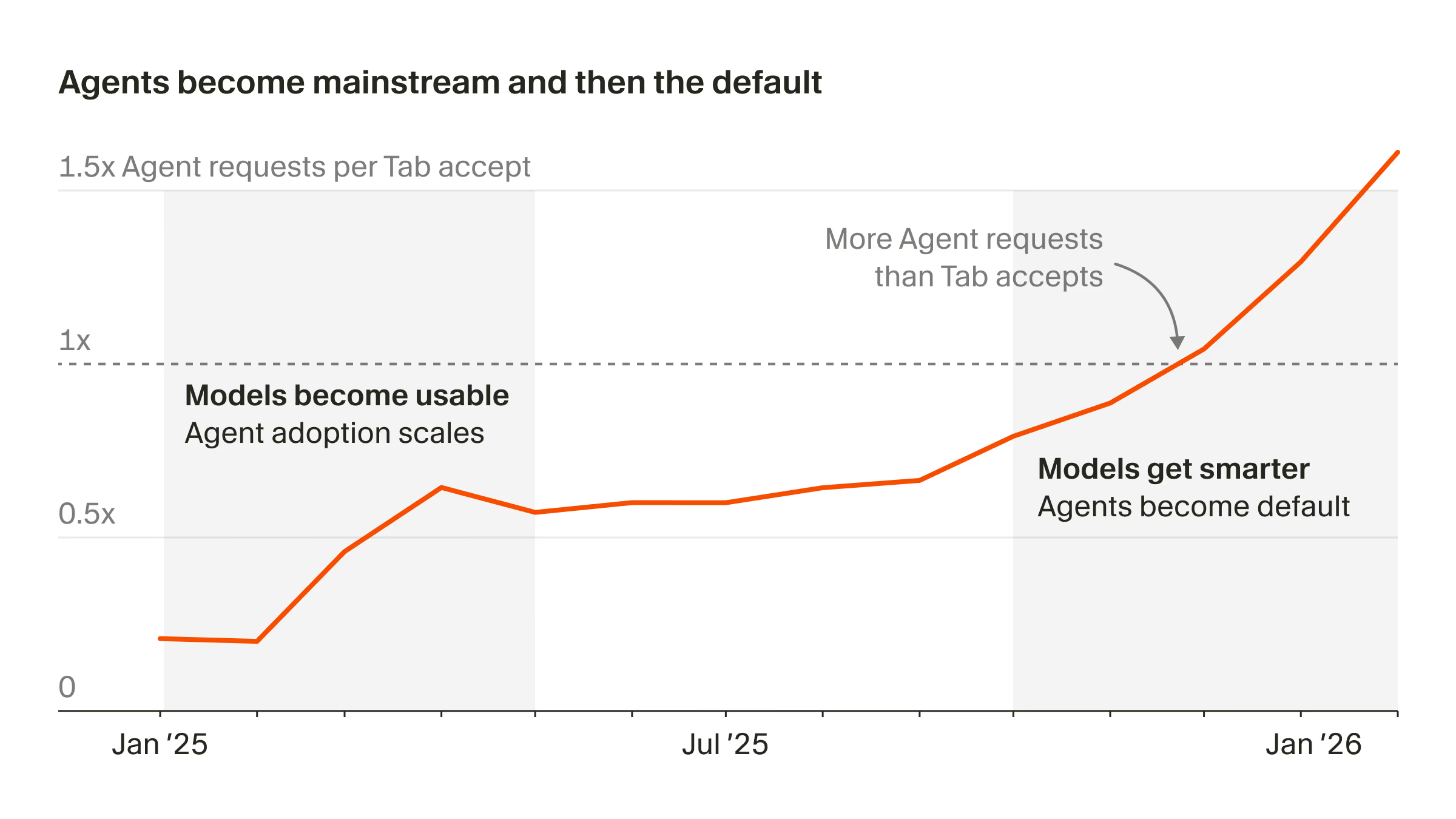
Karpathy Unpacks the Programming Paradigm Shift: Karpathy just dropped some juicy insights, revealing internal Cursor data that shows Tab completion requests are rapidly shifting towards Agent mode. His advice for devs: spend ‘80% of your time on practical work’ and ‘20% exploring the cutting edge,’ warning against ‘over-eager operations leading to more chaos.’ The leverage in programming is clearly moving from ‘sheer lines of code’ to ‘Agent orchestration power.’ Bet on that! 🛠️ 🔗 [X/karpathy]
The Toolbox
deer-flow (21.1k Stars / 🔗 [GitHub] ) Why It’s Hot: deer-flow is ByteDance’s open-source super agent workflow engine, a total game-changer! It supports autonomous research, coding, and content creation, running for hours non-stop on complex tasks thanks to its sandbox memory. This bad boy is perfect for deep research, code refactoring, and any scenario needing long-duration autonomous Agent execution. Plus, with over 600 new stars daily, the community is clearly hyped! 🔥
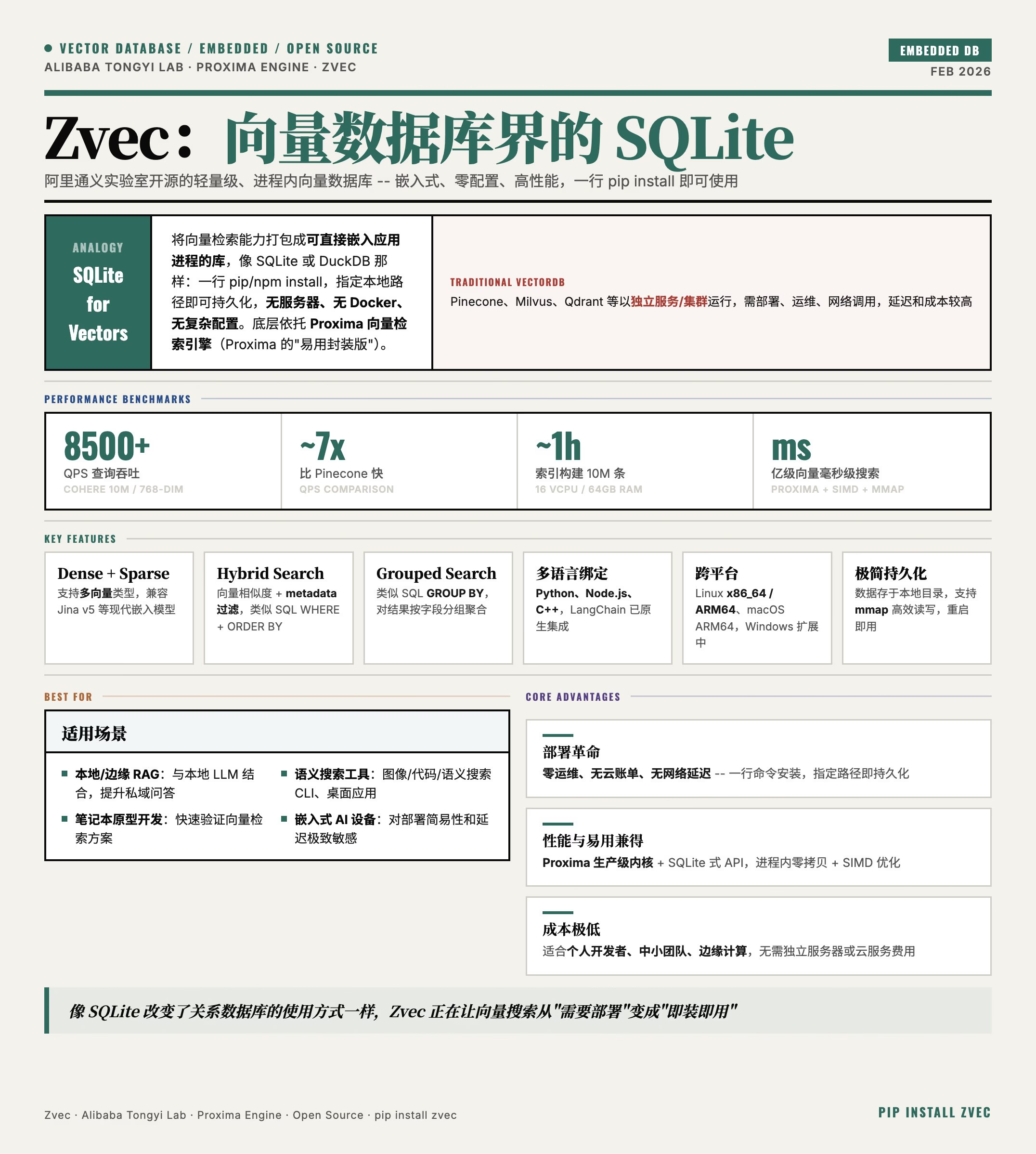
Alibaba Zvec (🔗 [GitHub] ) Why It’s Hot: Alibaba Zvec, straight outta Tongyi Lab, is an embedded vector library that’s all about zero-config and lightning-fast millisecond responses for billions of vectors – it’s roughly ‘7 times faster’ than Pinecone! Positioned as the ‘SQLite of the vector world,’ it tackles the headache of complex deployment for vector retrieval in RAG applications. This gem is perfect for developers needing local, lightweight vector search. Easy peasy! ✨
MobileAgent (10k+ Stars / 🔗 [GitHub] ) Why It’s Hot: MobileAgent, Alibaba’s killer mobile GUI intelligent agent toolkit, uses vision-perceptive multimodal models to automatically operate complex mobile app interfaces. It covers a range of parameter sizes from 2B to 235B and absolutely swept 20 GUI benchmark tests. This tool is a must-have for mobile automation testing, RPA process replacement, and similar scenarios. It’s a total mobile wizard! 📱✨
OpenFang (🔗 [GitHub] ) Why It’s Hot: OpenFang is a production-grade Agent operating system built with a Rust kernel – packing a whopping 137,000 lines of code! Its innovative ‘Hands primitive’ enables 24/7 operation, while a built-in WASM sandbox provides 16 layers of security protection. It plays nice with 40 channels and 50+ models. This bad boy is perfect for enterprise teams needing to deploy high-reliability Agents in production environments. Seriously robust! 🔒
Things to Ponder
Here’s something to chew on: Anthropic got threatened with sanctions by the state machine for ‘refusing to build weapons,’ while Grok scored a military pass for being ‘mission-critical.’ If ‘safety-first’ means getting booted out of the market, which company would dare to bet real money on AI safety anymore? When ethics turn into a competitive disadvantage, who can humanity even count on to hold the last red line? Deep thoughts, huh? 🤔
“We shape our tools and thereafter our tools shape us.” — Marshall McLuhan